

Bonded NdFeB Magnets
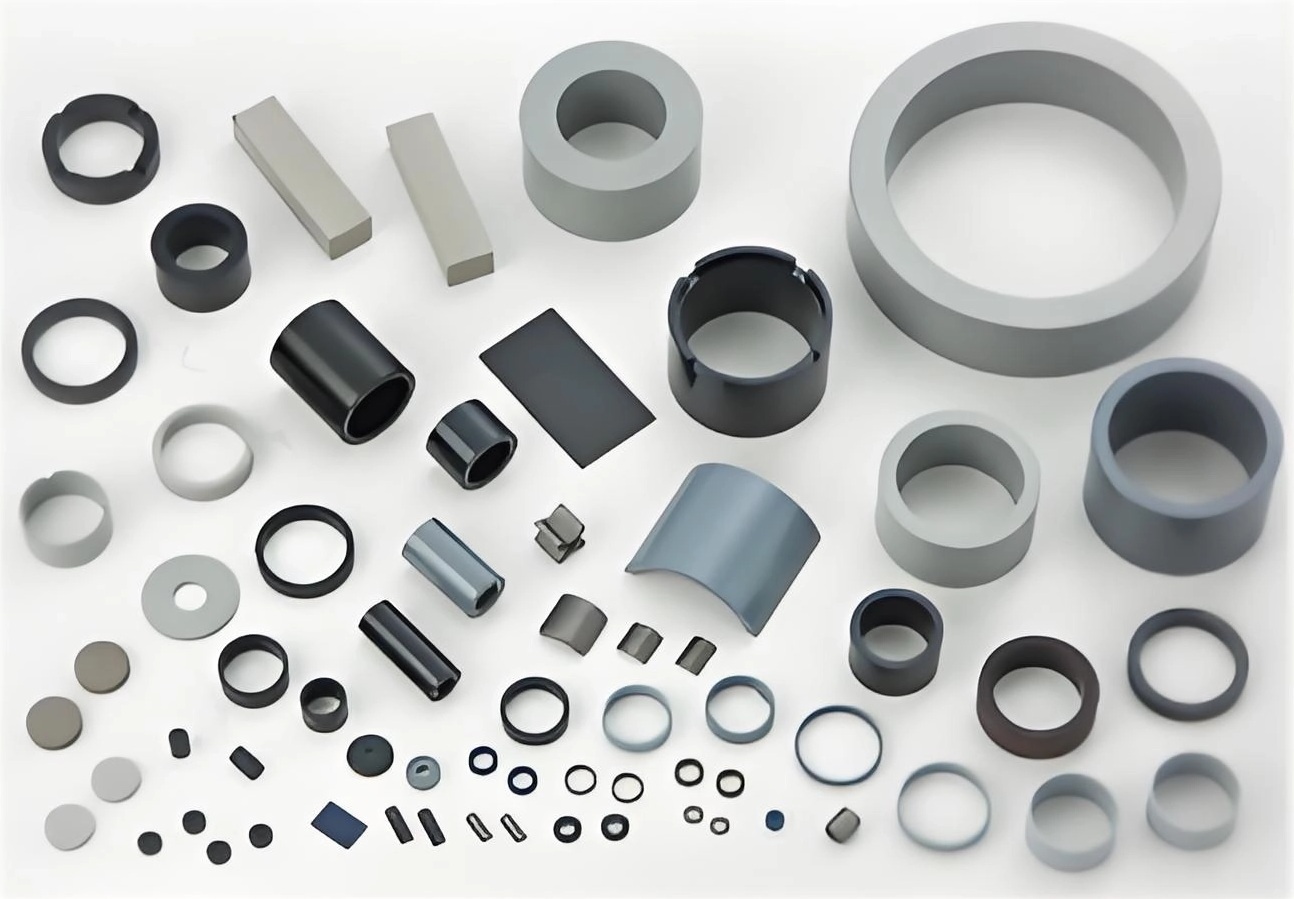
Bonded NdFeB magnets are manufactured from NdFeB magnetic powder combined with a polymer binder, offering excellent design flexibility and dimensional accuracy. While sintered NdFeB magnets provide superior magnetic performance, their manufacturing process limits shape complexity. Bonded NdFeB magnets address this limitation by enabling complex geometries, tight tolerances, and integrated multi-pole designs, although their magnetic strength is lower than that of sintered NdFeB magnets.
Compared with other metallic magnetic materials such as SmCo, bonded NdFeB magnets are lighter in weight and well suited for applications requiring compact size, high precision, and complex shapes. They provide an effective solution for many precision-driven and miniaturized applications.
Applications of Bonded NdFeB Magnets
Bonded NdFeB magnets are widely used in small and precision components. In the automotive industry, they are commonly applied in sensors, particularly in applications where AlNiCo magnets are limited by weaker magnetic performance, shape constraints, or multi-pole design requirements. In such cases, bonded NdFeB magnets offer a reliable alternative.
In addition, bonded NdFeB magnets are extensively used in consumer electronics, where their flexibility in shape and function helps designers overcome challenges associated with complex magnetic circuits. Compared with traditional materials such as AlNiCo or SmCo, bonded NdFeB magnets enable greater freedom in magnetic design and system integration.
Currently, bonded NdFeB magnets are produced using two main processes:
Compression molding
Technical parameters of each compression molding bonded materials
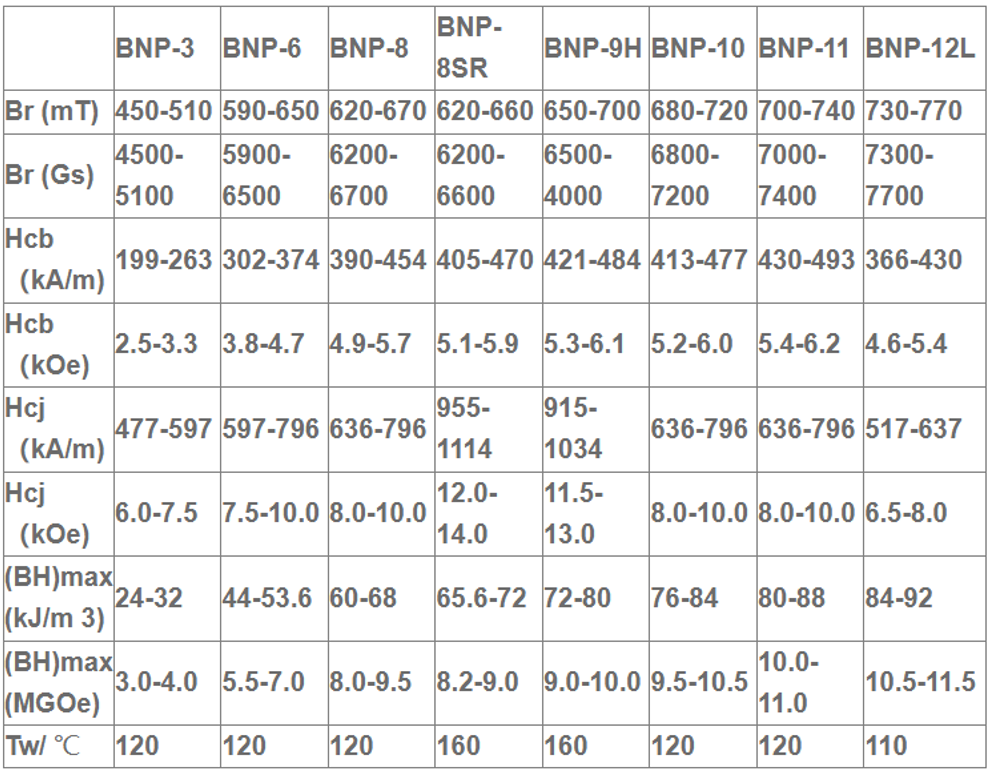
*All technical data provided above are for reference only and shall be confirmed according to approved samples and final agreement
Injection molding
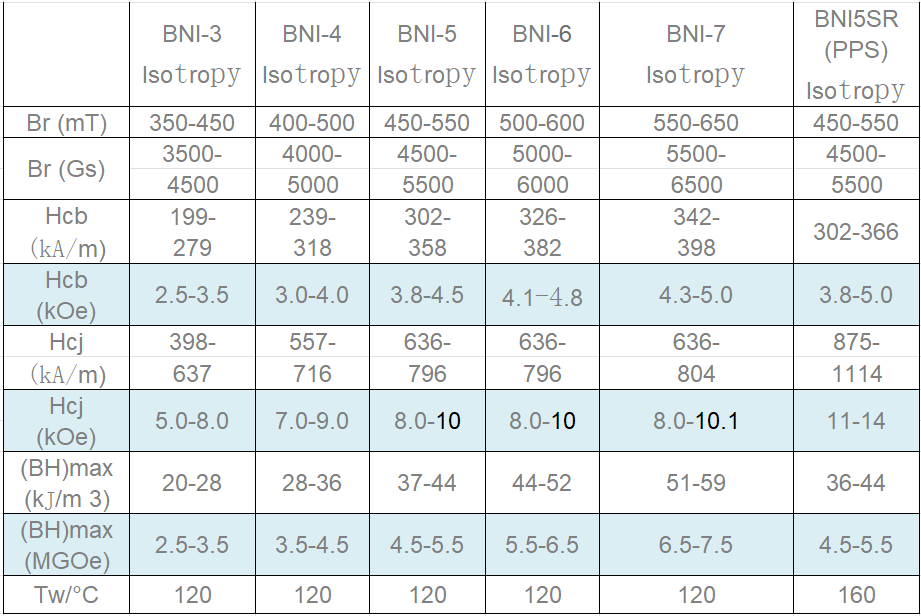
*All technical data provided above are for reference only and shall be confirmed according to approved samples and final agreement
Each process offers distinct advantages in meeting specific requirements for geometry, dimensional precision, and multi-pole magnetization. The choice of process depends on application needs and design complexity
